
Where Ancient Knowledge Meets a Changing World
Inside the World Ayahuasca Forum 2026 in Girona, where Indigenous leaders, scientists, artists and researchers gathered to rethink the future of ayahuasca — and who gets to shape it.
GIRONA, Spain — The conversation around ayahuasca is changing.
Once largely associated with Indigenous Amazonian traditions and spiritual ceremonies, the brew has increasingly entered laboratories, psychotherapy clinics, academic research and international cultural conversations. With that growing global interest comes a difficult question: who gets to define its future?
That question was at the heart of the World Ayahuasca Forum 2026, held September 11–13 at the Auditori Palau de Congressos de Girona in Catalonia, Spain.
Under the theme “A New Time of Alliance: A Call to Walk Together,” the three-day gathering brought together Indigenous leaders, scientists, healthcare professionals, researchers, artists and practitioners from different parts of the world.
But this was not simply another conference about psychedelics.
The forum sought to place Indigenous knowledge at the center of an international conversation increasingly dominated by scientific research, therapeutic applications and the global expansion of ayahuasca practices.
“The world needs hope.”
The words from ICEERS founder and executive director Benjamin De Loenen during the opening captured something of the atmosphere in Girona: an attempt to imagine a future in which different knowledge systems do not compete for authority, but learn to work alongside one another.
A Gathering Between Worlds
From the beginning, the forum positioned itself as an intercultural meeting rather than a conventional scientific congress.
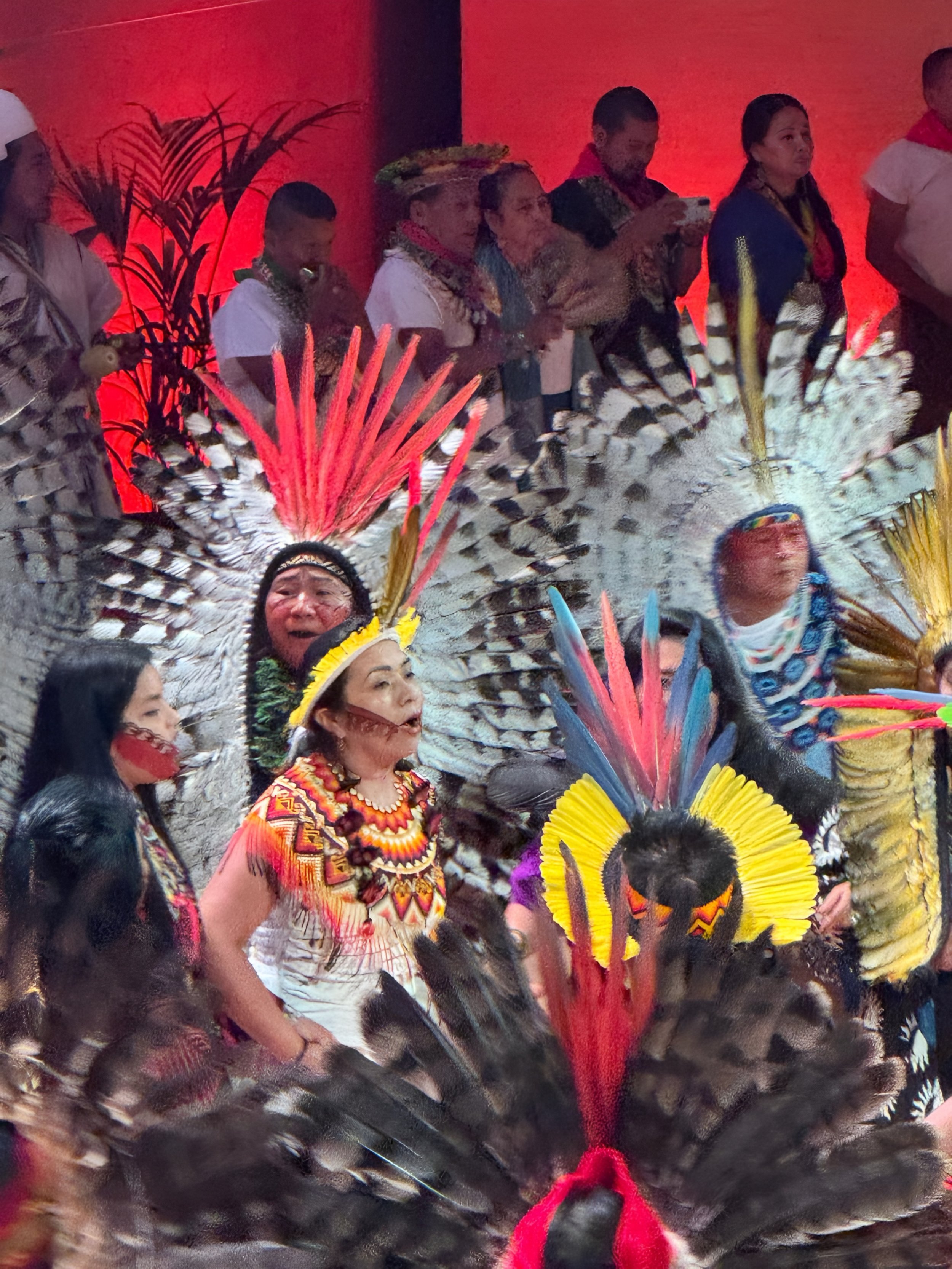
Indigenous leaders, researchers, artists and participants gathered in Girona for the World Ayahuasca Forum 2026, a three-day meeting focused on ancestral knowledge, science, Indigenous rights and the future of ayahuasca.
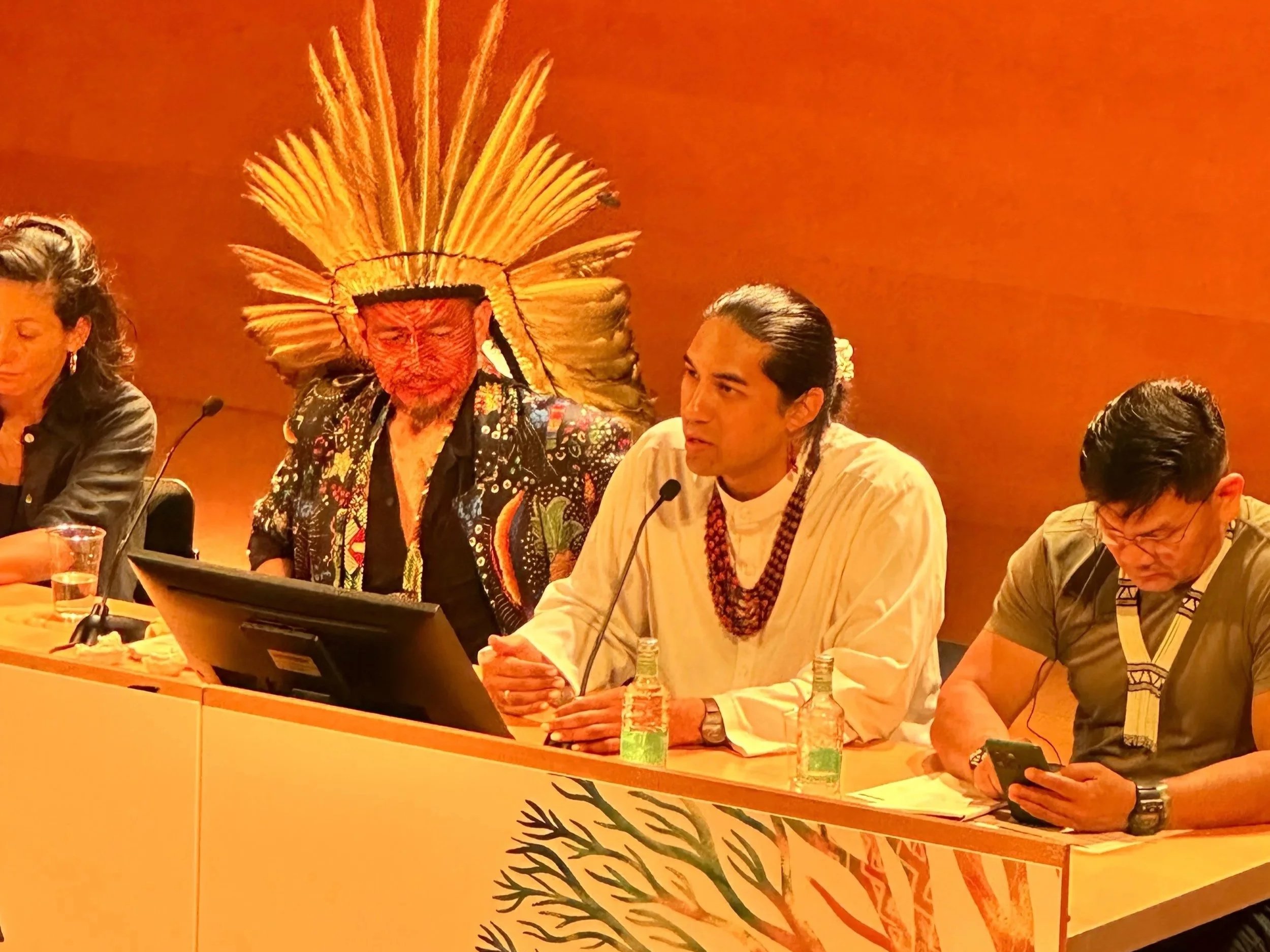
Indigenous leaders from Amazonian communities shared the program with researchers working in ethnopharmacology, psychedelic medicine, mental health and ecology. Among the prominent participants were Ashaninka leader Benki Piyãko, Yawanawa leader Nixiwaka Biraci Brasil, Indigenous artist and activist Daiara Tukano, ethnopharmacologist Dennis McKenna, mycologist Paul Stamets and psychedelic-medicine physician Pamela Kryskow.
The program moved across subjects that extended far beyond the chemistry of ayahuasca. Sessions explored Indigenous sciences, territorial governance, biocultural rights, mental health, ethics, safety, intellectual property, ecological protection and the globalization of traditional medicines. There were also spaces for music, art, cinema and storytelling — recognizing that Indigenous knowledge is not necessarily separated into the categories that dominate Western academic institutions.
The Question of Ownership
Beneath the scientific discussions was a more complicated issue: what happens when knowledge rooted in particular territories and cultures becomes global?
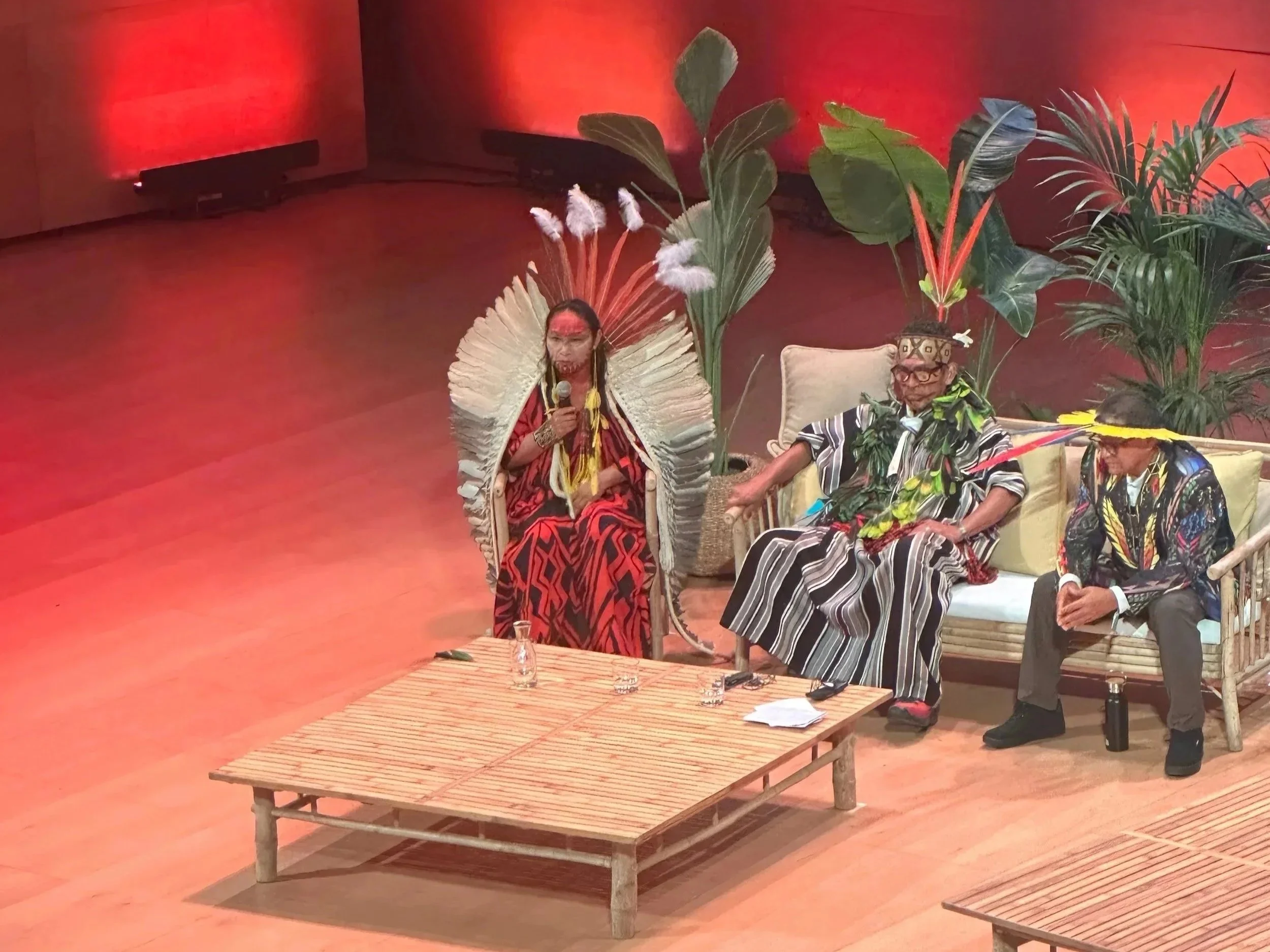
Ayahuasca is increasingly discussed internationally as a potential tool in mental-health research and psychedelic-assisted therapy. At the same time, ceremonies and retreats have spread far beyond the Amazon. For Indigenous communities, this expansion raises questions about cultural ownership, commercialization, intellectual property and sovereignty.
Benki Piyãko expressed the contradiction starkly.
“We cannot travel with our medicines. But, if you put them on a shelf, they are sold.”
The remark, reported by CartaCapital, pointed to a fundamental imbalance: Indigenous communities may face restrictions in moving or commercializing their traditional medicines while companies and international markets can potentially benefit from the growing global interest surrounding them.
Piyãko posed another question:
“Where is our right going?”
It is a question that reaches beyond ayahuasca. Who owns traditional knowledge? Who has the right to study it? Who benefits from research? And how can Indigenous communities maintain control over knowledge that has been transmitted across generations?
These questions gave the forum a political dimension that could not easily be separated from its scientific program.
Beyond the Laboratory
The presence of scientists and medical researchers reflected the rapidly changing landscape of psychedelic research. Among the forum's speakers were figures whose work has contributed to contemporary discussions about psychoactive plants, fungi, consciousness and psychedelic medicine. Yet the gathering repeatedly challenged the idea that scientific analysis alone can provide a complete understanding of traditional medicines.
A laboratory can examine molecules. Clinical research can measure psychological outcomes. Researchers can investigate pharmacology. But an Indigenous knowledge system may approach the same plant through relationships involving territory, ancestry, community, spirituality and ecological responsibility.
The forum's organizers sought to create space for these different approaches without reducing one to the other. A session on “Recognizing Indigenous Sciences as the Bridge Between Worlds” was particularly emblematic of that ambition.
Science, Culture and the Living World
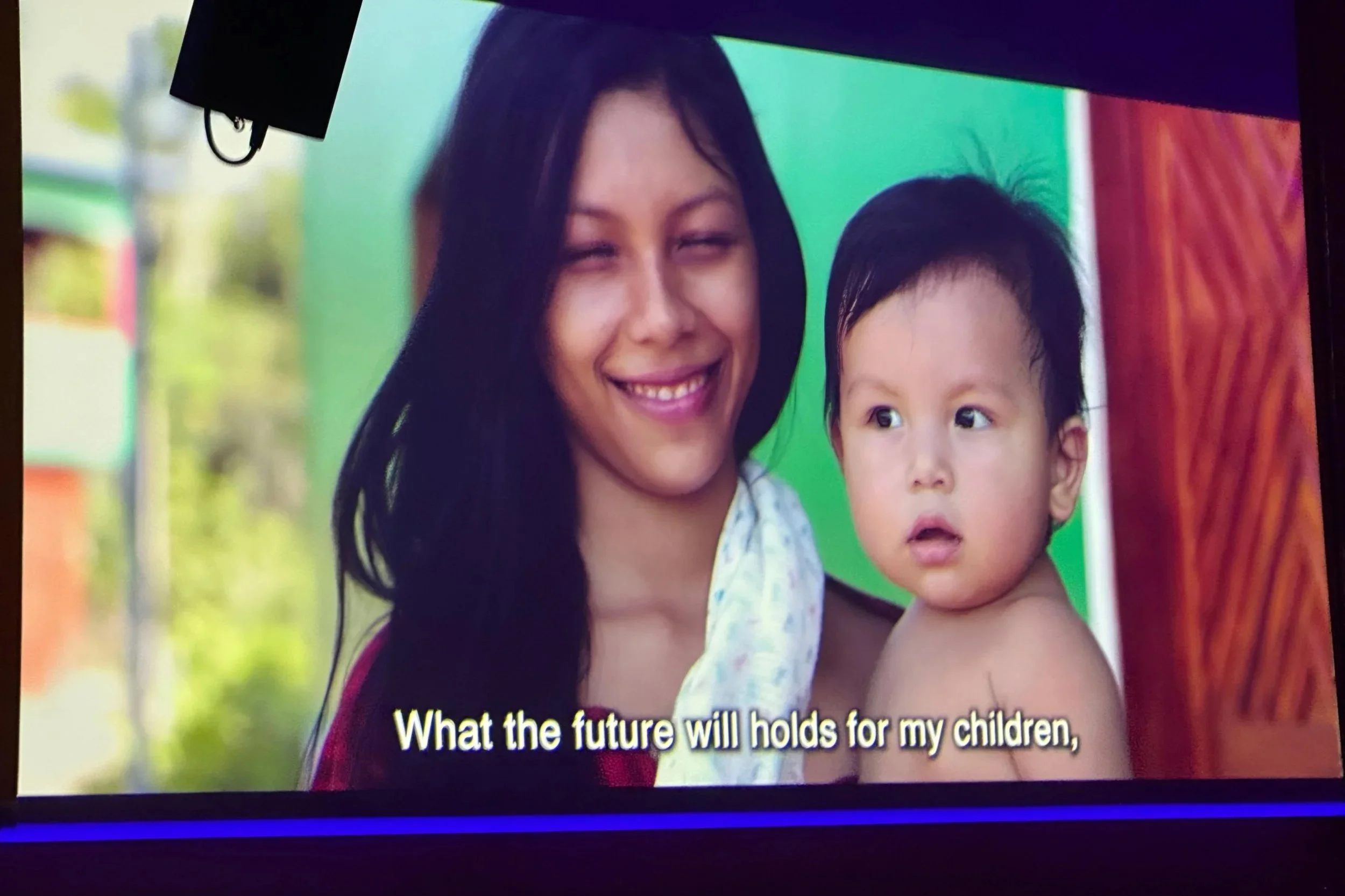
Ayahuasca is inseparable from the Amazonian environment in which many of its traditions developed. Conversations about the future of the medicine therefore inevitably intersect with questions about forests, biodiversity, Indigenous territories and climate change. For Girona, the forum also became an opportunity to connect these global conversations with local environmental initiatives. An environmental activity involving tree planting brought Indigenous delegates and local representatives together, reinforcing one of the event's recurring ideas: that conversations about traditional medicines cannot be separated from the ecosystems that sustain them.
Culture and ecology were similarly connected throughout the artistic program. Indigenous music, visual art, cinema and storytelling were not presented simply as entertainment surrounding the conference. They formed part of the knowledge being shared.
When Indigenous Knowledge Enters the Global Conversation
The growing international interest in ayahuasca creates a paradox. On one hand, scientific research and global attention can bring recognition to traditions that have historically been marginalized or misunderstood. On the other, globalization can turn traditional knowledge into a commodity — separating a medicine from the communities, territories and cultural frameworks in which it exists. That tension was visible throughout Girona.
The forum did not reject science or international exchange. Instead, it appeared to ask whether those relationships can be built differently.
Could researchers collaborate with Indigenous communities rather than simply study them? Could therapeutic applications develop alongside respect for cultural traditions? Could international interest contribute to the protection of Amazonian territories rather than further exploitation? And perhaps most importantly: could Indigenous peoples have an equal voice in determining the answers?
A Different Kind of Future
The final sessions of the forum turned toward the future, with “Paths and Alliances for a New Era” bringing the gathering toward its conclusion.
There was no single answer to the questions raised over three days.
Perhaps there could not be.
The future of ayahuasca is being shaped simultaneously by Indigenous communities, scientists, policymakers, therapists, artists, entrepreneurs and people seeking personal transformation.
What the World Ayahuasca Forum attempted was to bring these worlds into the same conversation — while insisting that the voices of the cultures that have carried these traditions for generations should not be treated as historical background.
In Girona, ayahuasca became a doorway into a much larger discussion.It was a conversation about knowledge and power, science and tradition, ecology and economics, culture and identity. And ultimately, it was a question of relationship.
The challenge, as the forum's theme suggested, is not simply to arrive at the same destination.
It is learning how to walk together.
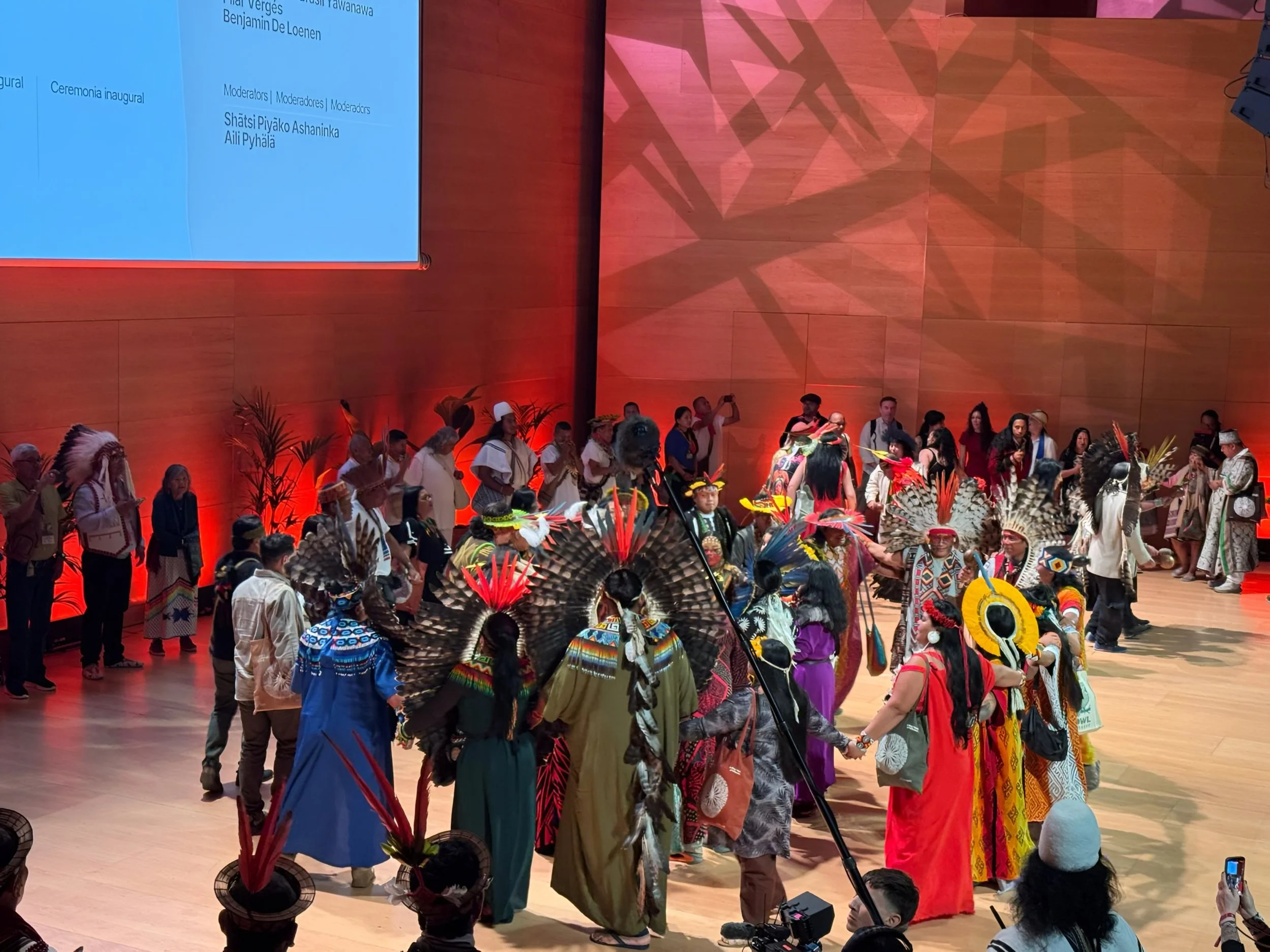
EARTH CODES AT WAF 2026
As one of the fiscal sponsors of the conference, Earth Codes was also present at Girona. EarthCodes co-founder and co-executive director, Kamal El-Wattar, was impressed with the three-day conference.
"We had the rare opportunity to meet some of the indigenous leaders who are at the forefront of their fields. It was one of the most hopeful experiences of our lives, as we witnessed the dialogues between people who hold the highest ancient technologies and those at the top of Western institutional science," said Kamal.
He continued, "We gained a firsthand understanding of some of the views on the use of indigenous knowledge in AI systems. Topics including recognition, ownership, and remuneration regarding indigenous data sharing were invaluable to our understanding as EarthCodes builds the ethical architecture for the EarthCodes Data Commons."
